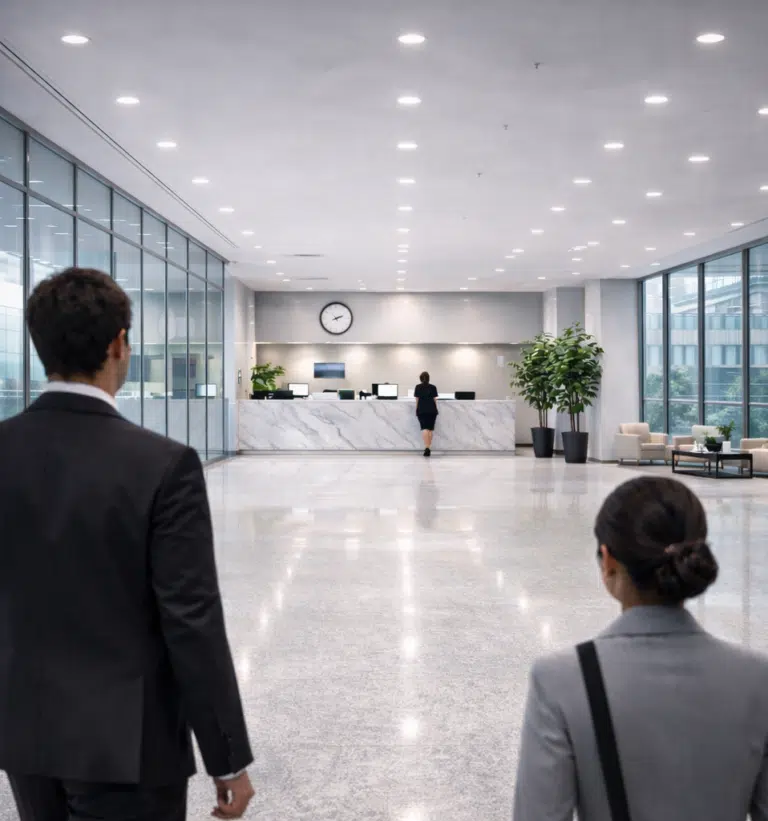
When someone steps into your facility for the first time, their brain starts evaluating the space before they consciously think about it. Research in psychology shows that first impressions form extremely quickly—often in just a handful of seconds—and they influence how people interpret everything that follows.
1. Floors and Entryways Set the Tone
People often notice the condition of the floors and entrance as soon as they walk in. A well-maintained surface that’s free of stains, dirt, or wear can boost confidence in overall cleanliness, while soiled or worn carpet or flooring can undermine that trust instantly.
2. Smell Influences Perception More Than You Think
Before sight even registers, the nose sends signals to the brain that can shape impressions. Fresh, neutral air conveys comfort and professionalism, while musty, stale, or chemical odors trigger negative associations, even if other aspects of the space are excellent.
3. Restrooms Are a Quick Credibility Check
Visitors don’t need to use the restroom for it to matter: they register odor, trash, and visible condition subconsciously. Poor restroom conditions are often interpreted as a sign that attention to detail is lacking elsewhere.
4. Glass, Surfaces, and High-Touch Areas Speak Volumes
Smudged glass doors, dusty light fixtures, and grimy handrails are small details, but to fresh eyes, they suggest neglect rather than familiarity. These cues can quickly overshadow positive impressions from other areas.
5. Cleanliness Conveys Trust and Care
The physical environment is not just decoration; it signals intent. Studies show that tidy, well-kept spaces make people feel safe, welcomed, and respected—key components of trust in any professional setting. (Unfold Business, 2021)
Why This Matters for Facility Leaders
People don’t think about these impressions—they feel them. Once a visitor’s brain tags a space as chaotic or neglected, it takes significantly more positive evidence to overturn that bias.
For facility teams, awareness of these subconscious judgments can help shape cleaning priorities, not just for health and hygiene, but for perception and confidence.
Tip: Conduct walkthroughs periodically with fresh eyes (or invite someone unfamiliar with the space). Notice what stands out first, and use those insights to guide cleaning checks and standards.